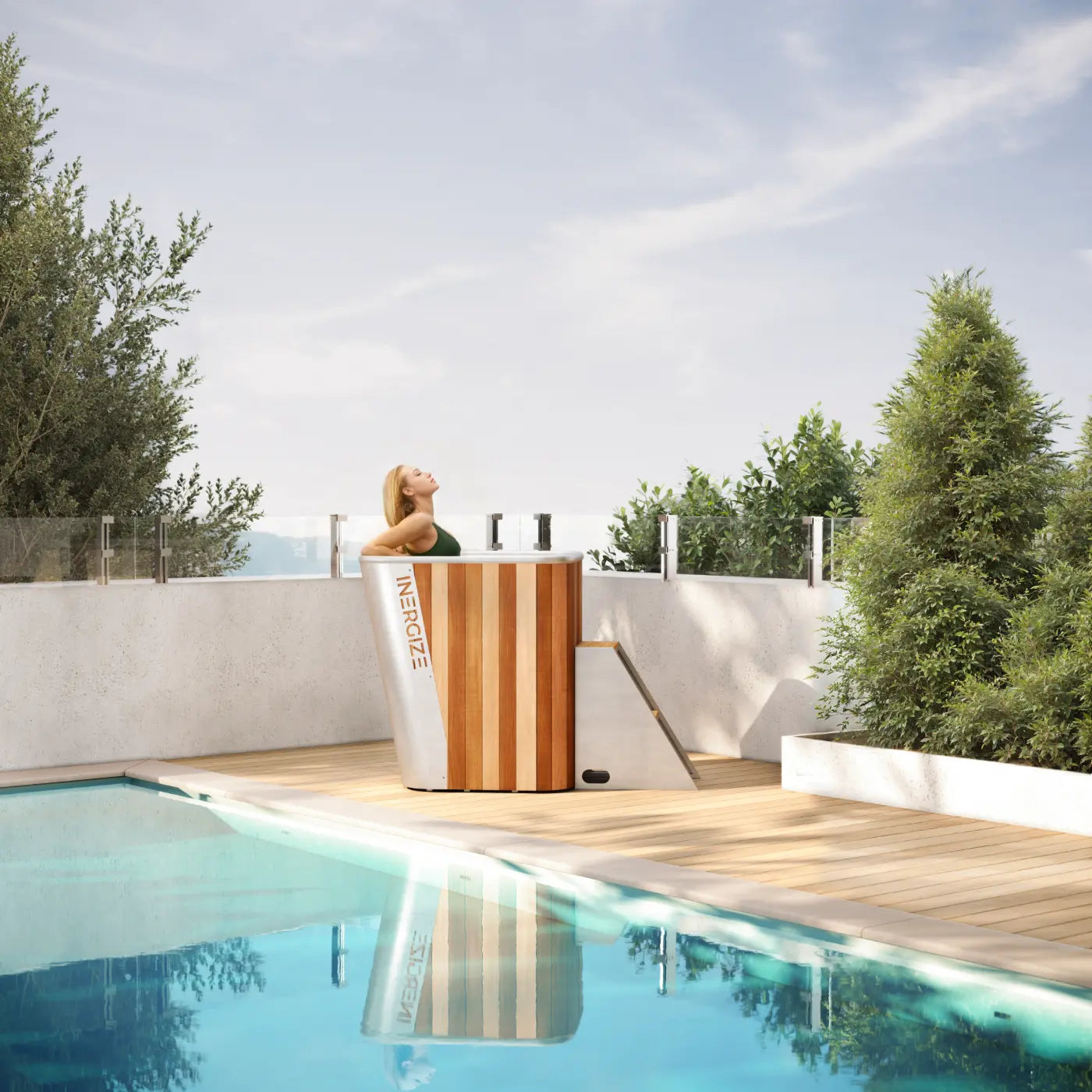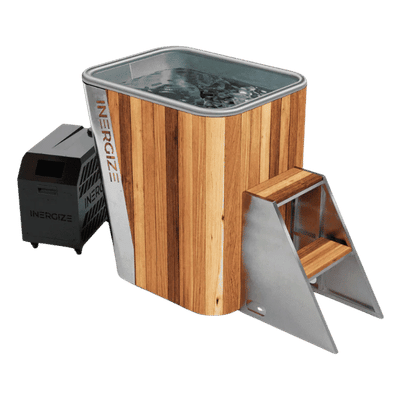
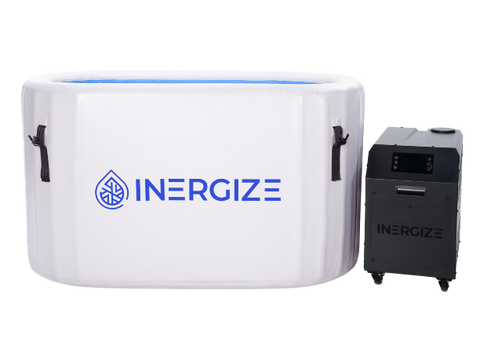


You know the walk. The morning after a hard session, when sitting down is a negotiation and the stairs feel personal. You trained well, you are proud of the work, and now your legs are sending you the invoice. So you reach for the usual recovery toolkit. Foam roller. Protein shake. Maybe an early night. Some of it helps a little. Most of it leaves you wondering if anything actually moves the needle on how sore you feel tomorrow.
There is, and it has some of the strongest evidence in the whole recovery conversation.
Cold water immersion reliably reduces next-day soreness, and the research backs it with real numbers.
Before you write that off as another recovery fad, let us walk through what the studies actually show. Not influencer claims. Peer-reviewed meta-analyses with pooled data from real trials.
Why cold quiets the soreness
That deep ache a day or two after training has a name: delayed onset muscle soreness, or DOMS. It comes from the microscopic damage and the inflammatory cleanup that follow hard effort, especially the lowering, lengthening part of a lift. Some of that process is useful. But the swelling, the tenderness, and the secondary inflammation can pile on more discomfort than you need to recover well.
Cold is a direct lever on that pile-on. When you immerse, the cold prompts your blood vessels near the surface to constrict, which helps limit the swelling and calms the secondary inflammatory response in the hours after training. Here is the compelling number. In a 2025 network meta-analysis in Frontiers in Physiology, pooling results across trials, cold water immersion reduced DOMS with an effect size of roughly negative 0.40, a meaningful dent in how sore people felt. The same analysis found cold significantly lowered creatine kinase, a marker your muscles release when they have taken damage, with the strongest effect right around the 24 hour mark.
So the soreness you feel and the damage markers in your blood both come down. That is a solid, repeatable win.
What cold does well, and what it does not
Here is where honesty earns your trust. The best evidence for cold is about how sore you feel and the muscle-damage markers, not about restoring your strength and power on the same day. A separate meta-analysis (PMC9896520) makes this clear. Cold water immersion reliably reduces the subjective feeling of soreness compared with doing nothing, while the evidence for bouncing back stronger or more powerful in the next few hours is weak and mixed.
That is not a knock on cold. It is the right way to use it. If your goal is to feel less wrecked tomorrow, to sleep better tonight, and to walk normally the day after a brutal session, cold is excellent and well supported. Just do not expect it to hand you a personal best a couple of hours later.
One time to wait
There is a single, useful exception worth knowing. If your main goal right now is building muscle, do not plunge in the few hours right after lifting. A 12 week training study by Roberts and colleagues found that immersing immediately after strength work dampened the muscle-growth signal and led to smaller gains over time. The fix is simple: separate your plunge from your lift by a few hours, or save cold for rest and cardio days. We break the timing down in full in our post on athletic performance and timing, so you can plan it around your goals. For pure soreness and recovery, though, cold remains one of the best tools you have.
The exact protocol for recovery
Temperature: 50 to 59 degrees Fahrenheit (10 to 15 degrees Celsius). Cold enough to do the work, comfortable enough to stay in and breathe.
Duration: 10 to 15 minutes total. Recovery is one place where a little more time in the water is appropriate, since you are after the anti-swelling effect. You can split it if you prefer, but aim for that range across the session.
Timing: Best within a few hours after a hard session, or the next morning if you are chasing the 24 hour soreness window. The one exception is above: if hypertrophy is the goal, leave a gap after lifting.
Technique: Submerge the muscles you worked, up to the neck where you can. Keep your breathing slow and your exhale long, and let your body relax into it rather than bracing.
Post-plunge: Rewarm gently and naturally. A light walk and slow breathing beat jumping straight into a hot shower.
Frequency: Use it on your hardest training days and after events. For most people that lands at 3 to 5 sessions a week.
What to expect
That same evening: Legs tend to feel lighter and less heavy than they usually would after a hard session. Many people also sleep more soundly.
The next morning: This is the payoff. The stairs and the chair feel far more manageable than the soreness scale would normally predict. The 24 hour window is where the data is strongest, and it shows.
Across a few weeks: As cold becomes part of your routine, the day-after slump after big sessions gets noticeably smaller, so you can train hard again sooner.
The bottom line
Recovery does not have to be a guessing game of rollers and hope. Cold water immersion is one of the best-evidenced ways to cut next-day soreness and the muscle-damage markers behind it, with the strongest effect right at the 24 hour point. Use it well, mind the one timing note if you are building muscle, and cold becomes a quiet, reliable ally that gets you back to feeling like yourself, ready for the next session.
References
- Impact of different doses of cold water immersion (duration and temperature variations) on recovery from acute exercise-induced muscle damage: a network meta-analysis. Frontiers in Physiology. 2025; 16: 1525726. https://www.frontiersin.org/journals/physiology/articles/10.3389/fphys.2025.1525726/full
- Effects of cold water immersion after exercise on fatigue recovery and exercise performance: meta-analysis. PMC9896520. https://www.ncbi.nlm.nih.gov/pmc/articles/PMC9896520/
- Roberts LA, Raastad T, Markworth JF, et al. Post-exercise cold water immersion attenuates acute anabolic signalling and long-term adaptations in muscle to strength training. The Journal of Physiology. 2015; 593(18): 4285-4301. https://physoc.onlinelibrary.wiley.com/doi/abs/10.1113/JP270570
Financing available · HSA/FSA eligible
For the daily ones.
Cold plunges engineered to last, backed by 5,000+ owners and a US support team.
Shop cold plunges