


You know the kind of day. Nothing is technically wrong, but a grey fog has settled over everything. You feel flat, a little heavy, slightly off your own pace. The to-do list looks taller than it should, and your usual fixes are not landing. Most days the mood eventually lifts on its own, but it would be nice to have something you can actually reach for.
Here is something worth knowing on those days: a few minutes in cold water has a measurable effect on how you feel, and the change shows up fast.
Cold water immersion can lift your mood, and researchers have watched it happen on a validated scale.
Before you file that under wishful thinking, let us walk through what the research actually shows. Not influencer claims. Peer-reviewed studies with real data. A note up front, because it matters: this is about the normal low days we all get. It is not a treatment for depression, and nothing here is a promise.
Why cold reaches your mood so quickly
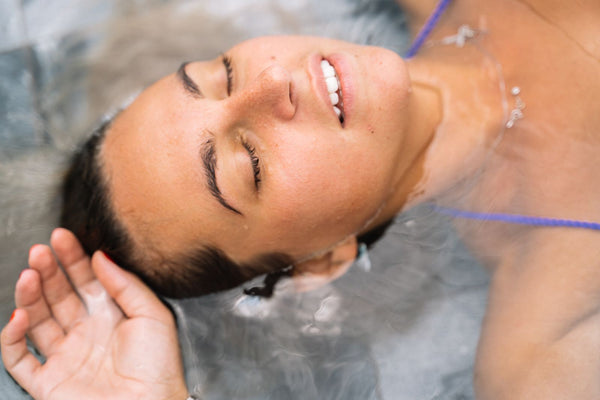
Think of your mood on a flat day as a dimmer switch turned low. Cold water does not gently nudge that dimmer. It grabs it. When you get in, the plunge sends a flood of signals from the cold receptors in your skin straight up to the brain, alongside a surge of noradrenaline, the alertness and drive chemical. That combination is loud enough to cut through the fog and pull your attention out of the grey and into the present moment.
What the studies show
The clearest number comes from a 2023 study by Yankouskaya and colleagues, published in the journal Biology. They had 33 adults take a single five-minute cold bath and measured mood before and after using the PANAS scale, a well-established questionnaire that tracks positive and negative feelings separately. After one short cold bath, positive mood rose and negative mood fell, by roughly five points each. Feelings of distress and nervousness dropped. In plain terms, people walked in flat and walked out lighter, and the change was big enough to measure on a validated tool.
So why might that happen? The most cited answer is a hypothesis paper by Shevchuk, published in Medical Hypotheses in 2008, and it is important to be clear this is a proposed mechanism, not proof. Shevchuk suggested cold exposure could lift low mood through three things working together: a flood of noradrenaline, a release of beta-endorphin (one of the body's own feel-good chemicals), and a huge volume of cold-receptor signals firing up to the brain at once. Think of it as the body's own version of turning the lights on in a dim room. It lines up with what people report, but it remains a hypothesis rather than a settled fact.
Then there is the human side of it. In a 2018 case report in BMJ Case Reports, van Tulleken and colleagues described one woman who took up cold open-water swimming and found her mood improved. This is a single person's story, what researchers call an "n of 1," one experience, not a result you can promise anyone else. We share it because it is honest, not because it proves anything. Some people report that cold water genuinely helps on hard days, and early research is interested in why. That is where things honestly stand.
The exact protocol for a low day
Temperature: 50 to 59 degrees Fahrenheit (10 to 15 degrees Celsius). This is plenty. You are after the mood shift, not a feat of endurance, and colder is not better here.
Duration: 2 to 5 minutes. The Yankouskaya mood result came from a single five-minute bath, so you are in the right zone anywhere in this range.
Timing and technique: Use it when the fog rolls in. Morning works well to set the tone, but a midday dip is just as valid when you feel yourself sinking. Get in to the shoulders and keep your breathing slow and deliberate. A steady exhale keeps you in control of the moment instead of bracing against it.
Post-plunge: Step out and let yourself warm up naturally. Move around a little, and notice how you feel. That settling period, as your body rewarms, is often when the lift becomes obvious.
Frequency: Reach for it whenever a low day hits. Many people find a few sessions a week keeps the baseline steadier, and there is no need to force it on the days you already feel good.
What to expect
Your first session: The first ten seconds feel intense, and your body wants to brace. Slow the exhale, and within a minute or two a clearer, brighter feeling usually arrives. Most people step out feeling noticeably better than when they got in.
Days 3 to 5: If you use it across a few low moments, you start to trust it. Knowing you have a reliable reset for a grey mood is, on its own, a quiet kind of relief.
Week 2 to 3: With regular use, people often describe their baseline as a little more stable. The flat days still come, they just feel less sticky, and you have a tool you know how to use.
The bottom line
Everyone gets low days. They are part of being human, not a flaw to fix. What is genuinely encouraging is that you are not powerless in front of them. A few minutes in cold water has a measurable effect on mood, lifting the positives and easing the negatives, and people keep using it for a simple reason: on a grey day, it helps them feel more like themselves. That is a good thing to have within arm's reach.
References
- Yankouskaya A, et al. Short-Term Head-Out Whole-Body Cold-Water Immersion Facilitates Positive Affect and Increases Interaction between Large-Scale Brain Networks. Biology. 2023. https://www.mdpi.com/2079-7737/12/2/211
- Shevchuk NA. Adapted cold shower as a potential treatment for depression. Medical Hypotheses. 2008. https://pubmed.ncbi.nlm.nih.gov/17993252/
- van Tulleken C, Tipton M, Massey H, Harper CM. Open water swimming as a treatment for major depressive disorder. BMJ Case Reports. 2018. https://pubmed.ncbi.nlm.nih.gov/30131418/
Financing available · HSA/FSA eligible
For the daily ones.
Cold plunges engineered to last, backed by 5,000+ owners and a US support team.
Shop cold plunges